



By Sarah Hotham, Health in Places, Co-theme Lead, Allied Research Collaboration Kent, Surrey and Sussex (ARC KSS) and Senior Research Fellow, University of Kent.
What really helps us to live healthier lives, and how much does the place around us shape the answer?
Healthcare plays an important role, but our health is also influenced long before we visit a GP surgery or hospital. The homes we live in, the work we do, the money and resources available to us, the transport we use and the people around us can all make a difference.
These connections were central to our Health in Places workshop at the ARC KSS Research Week 2026 symposium, Advancing Inclusive Research. Held at the University of Kent in Canterbury in September, the event brought together researchers, practitioners and students from across Kent, Surrey and Sussex to share ideas and learn from one another.
Looking at health through the places where we live
During the workshop, we introduced the focus of the Health in Places theme and shared where we hope to take our work over the next 5 years.
The theme begins with a simple but powerful idea: the places where we live, work and grow up have a major influence on our health. Many of these influences sit outside traditional health services.
Our research will explore how local conditions affect people’s health and wellbeing. We will also look at how communities, local government and researchers can work together to create places that are healthier and fairer for everyone.
Bringing the building blocks of health to life
After introducing the theme, it was time to get creative.
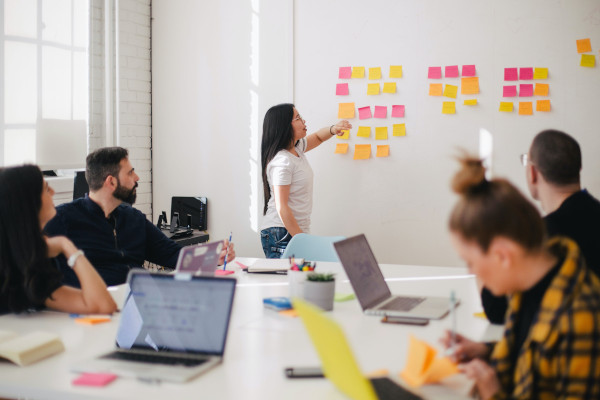
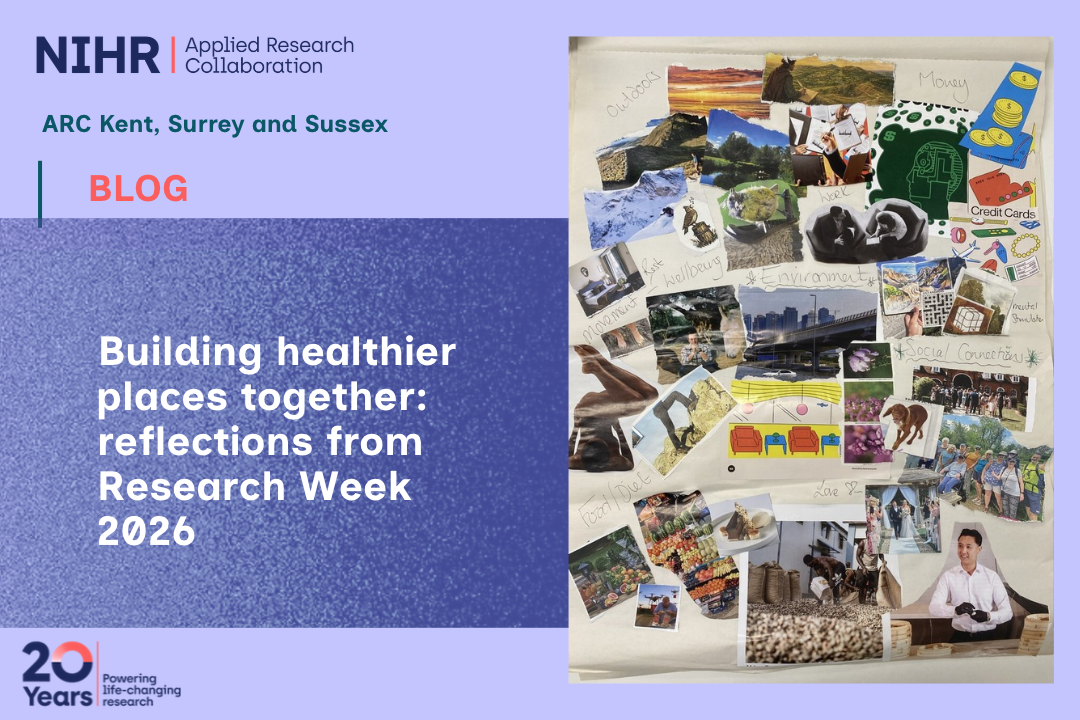
Using the Health Foundation’s building blocks of health model as a starting point, participants worked in groups to create collages showing what helps people to stay healthy.
The model includes areas such as: good work; money and resources; housing; education and skills; food; transport; our surroundings; and family, friends and communities.
Armed with pictures, paper, scissors and glue sticks, each group explored what these building blocks look like in everyday life.
Making connections
Each group presented its collage and talked through the choices it had made.
The conversations highlighted how closely the different building blocks are connected. When one is missing or unstable, it can weaken the others. Poor transport, for example, may make it harder to reach work, education, shops, services or social activities.
The discussion also showed that these building blocks are not arranged equally for everyone. People’s opportunities and experiences can differ depending on where they live and the resources available in their community.
Creativity can open up new conversations
The workshop showed the value of using creative methods to explore complex ideas. Making collages gave participants a different way to share their experiences, make connections and consider what healthy and fair places could look like.
These conversations will help inform how we think about the Health in Places theme as its work develops over the next 5 years.
Thank you to everyone who joined the session, picked up a glue stick and shared their ideas. Your contributions helped bring the building blocks of health to life.
Find out more about the work of the ARC KSS: Building healthier futures together 2026-2031 summary.
