
Championing reflective practice and inclusive workforce transformation
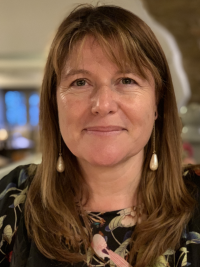
With nearly four decades of experience in the NHS as a nurse and leader, Ruth Germaine brings a deeply relational and reflective approach to workforce transformation. Her career has spanned hospital, community, and general practice settings, culminating in system-wide leadership roles focused on advancing practice and lifelong learning. In 2023, Ruth founded her own consultancy company to continue her mission of creating spaces for meaningful dialogue and collaborative change.
Ruth’s current project, funded by ARC KSS, centres on embedding continuous professional development (CPD) into everyday practice to better meet the needs of people with learning disabilities and/or autism. Her work is grounded in co-production, inclusive practice, and knowledge mobilisation—ensuring that lived experience shapes both strategy and delivery.
Could you tell us a bit about your journey and what led you to establish consultancy company?
I worked in the NHS for 39 years as a nurse across hospital, community, and general practice settings. Over time, I became increasingly aware that people often needed something beyond clinical care, support that was more relational, creative, and reflective. When I was told my role was to “get them in and get them out,” I knew it was time to explore new ways of making a difference.
In the final decade of my NHS career, I focused on workforce development, supporting integrated care, lifelong learning, and distributed leadership. As a Darzi Fellow in 2019, I led a project on place-based learning in primary care, co-producing values and securing funding to embed learning cultures across Primary Care Networks. I carried these principles into my final NHS role, leading system-wide networks for Advancing Practice and Independent Prescribing in Kent and Medway.
When that role ended in 2023, I founded my own consultancy company to continue supporting people, teams, and organisations to think creatively, reflect deeply, and focus on what truly matters. Through coaching, facilitation, and my podcast “So Who Cares Anyway”, I create spaces for meaningful dialogue and collaborative change, centring lived experience and relational care.
What inspired your focus on workforce transformation in the context of learning disabilities and/or autism?
Early in my consultancy work, I was invited to join the Learning Disability and Autism Consultancy Practice Community of Practice, building on my previous role as Advancing Practice Lead. Through this, I saw how underrepresented these communities are, and how often their needs go unmet due to gaps in workforce skills and service design.
I reflected on my time as an Advanced Nurse Practitioner in primary care, where I didn’t always have the specialist skills needed to support people with learning disabilities and/or autism. I also saw how limited the services were in meeting those needs. That experience stayed with me.
So, I chose to focus my expertise on workforce transformation for these groups, bringing together inclusive practice, co-production, and lifelong learning to help build a system that truly sees and supports people.
Tell us a little bit about your 'Workforce Transformation through Continuous Professional Development to meet the needs of people living with Learning Disabilities and/or Autism' project. How did your current project come about, and what role did the NIHR and ARC KSS play in supporting it?
This project emerged from a recognition that traditional workforce development often overlooks the lived realities of learning disabled and autistic people. In both clinical and leadership roles, I’ve experienced and seen how professionals want to work differently and change, but often lack the time, relationships, and reflective space to truly meet people’s needs.
Building on my work in Place-Based Learning, I’ve reframed CPD as a dynamic, embedded process that includes people and communities across neighbourhoods. By treating the workplace as the main resource for learning allows staff to learn through real-time reflection, adaptation, system wide networks and coproduction with those that matter.
With knowledge mobilisation funding from NIHR and ARC KSS, I’ve been given two days a week over 18 months to lead this work. I have developed a steering group to help with this work and plan, with the to explore what works and what doesn’t, for whom and why, surfacing the conditions for real transformation.
The aim is to build a workforce that’s not just skilled but deeply attuned to the communities it serves, reshaping how learning happens, who leads it, and how it translates into meaningful outcomes for learning disabled and autistic people across neighbourhoods.
What does “knowledge mobilisation” mean to you, and why is it so central to your work?
To me, knowledge mobilisation is about making knowledge active, relational, and contextually grounded. It’s not just about sharing information, it’s about co-creating meaning, translating insight into action, and embedding knowledge in practice in ways that work for the people who live it, those providing support or care and the people in our communities.
That means understanding the context, not imposing solutions. Knowledge must be shaped with, not for people. Mobilisation only becomes meaningful when it includes those who hold lived experience, honours diverse ways of knowing, and supports collective agency.
It’s central to my work because transformation in health and care doesn’t happen in isolation, it happens when people learn together, reflect together, and build shared purpose. Whether I’m facilitating a workshop, designing a framework, or hosting a podcast conversation, I focus on mobilising knowledge that’s grounded in values, shaped by experience, and capable of driving real change.
Project goals and approach Your project aims to embed continuous professional development (CPD) into everyday practice. What does that look like in real terms?
In real terms, it means shifting CPD from something we attend to something we live. It’s about mobilising what we know into the context we’re in, learning through relationships, reflection, and everyday practice. This project is about uncovering how that happens, with and alongside people, not in isolation.
How do you balance traditional CPD approaches with more embedded, real-time learning informed by lived experience?
It’s a balance this project will exploring. Traditional CPD offers structure, but embedded learning brings relevance, reflection, and relational depth. It’s about contextualising formal learning into practice, mobilising knowledge in real time, shaped by lived experience and the environments we work in. That’s where meaning and momentum meet.
What are some of the key outcomes you hope to achieve for people with learning disabilities and/or autism?
One of my central hopes is to see learning disabled and autistic people recognised as assets, with meaningful roles in shaping systems rather than simply being consulted. I want them involved from the beginning—designing professional development and shaping services around what truly matters to them. I believe it’s essential that they are acknowledged as experts in their own lives and experiences.
I’m working toward a future where people have access to proactive and preventative services, so escalation and admissions are reduced, and support is available long before a crisis point. My aim is for services to be accessible when needed, so people feel empowered to live life on their own terms, receiving support that works for them and is consistent.
I strive to create environments and interactions that reduce overwhelm, honouring neurodiverse needs so people feel safe and understood. Rather than expecting individuals to adjust to care environments, I want places and people to adapt to those they support instead. This commitment is at the heart of my work and shapes every decision I make.
Co-Production and inclusion You emphasise involving people with lived experience as assets. How are they shaping the direction and delivery of this project?
From the outset, I’ve prioritised building relationships with people with lived experience, inviting them to join the project’s steering group as equal contributors. Others on the group also bring strong connections to lived experience communities, ensuring diverse perspectives are embedded from multiple angles.
As the project evolves, I’m planning a series of co-creation engagement events, designed and shaped with the steering group for all stakeholders to join, with a particular focus on ensuring people with lived experience are included, seen as assets, and given agency. These events will build on existing relationships, with attention to accessibility, inclusion, and adaptability. The aim is not just to invite participation, but to ensure the format and content reflect what works for them.
At the heart of this approach is my commitment to shared learning. We’ll be exploring which knowledge resonates most, identifying what might be missing or misaligned, and considering how we can mobilise this knowledge in ways that truly matter to those involved.
People with lived experience are shaping both the strategic direction and the practical delivery of the project, ensuring it remains grounded in what matters most.
What have you learned so far from engaging with stakeholders and service users?
There’s already a wealth of good work happening, especially in connecting with learning disabled and autistic people. These relationships offer strong foundations to build on.
One of the most powerful lessons has been the impact of inclusive language. Even small shifts in how we communicate can reshape engagement and understanding. Sharing this learning more widely could make a real difference.
I’ve heard difficult stories about people’s experiences accessing services, times when they weren’t listened to or misunderstood. These moments reinforce the need for embedded learning that helps professionals truly support people with learning disabilities and autism.
My understanding of both learning disabilities and neurodivergence has deepened. I’ve come to appreciate how these groups are often brought together under shared labels yet have distinct needs and lived experiences. What works for one person may not work for another, and meaningful inclusion requires flexibility, curiosity, and co-creation.
Most importantly, I’ve seen how powerfully people can advocate for themselves when given the right support and environment.
Implementation and impact
Can you walk us through the project timeline and what’s been achieved so far?
So far, I have focused on building strong foundations for this work. I brought together a diverse steering group that includes people with lived experience, and we’ve already held our first meeting, with another on the horizon. Together, we’ve co-developed the core questions guiding our literature review, which is now underway and already yielding valuable insights.
Looking forward from August 2025 through to October 2026, my priority will be delivering the coproduction engagement events, with ongoing support from the steering group and those with lived experience. I intend to keep sharing learning and strengthening ties with related workstreams as we move ahead. The insights we collect from these engagement events will help us select our first pilot area between November 2025 and January 2026. From February to July 2026, we’ll implement and review the first pilot, then move forward with the second pilot. After both pilots are complete, we will carry out a comparative review to assess which approaches are sustainable. The journey will culminate in a final report and a closing event, where I’ll share our findings and ensure the momentum carries forward into the next phase.
What challenges have you encountered in embedding CPD into practice, and how have you addressed them?
It’s early days, and embedding CPD into practice will be explored during the pilot phase following the cocreation engagement events. However, I’m already laying the foundations by involving diverse stakeholders, including lived experience voices, in shaping the review questions and engagement design. This collaborative approach is intended to surface practical insights and anticipate implementation challenges early.
How do you plan to measure the impact of this work on both the workforce and service users?
We will use different ways to measure how this work helps both staff and people who use services. This includes surveys, interviews, and honest feedback from patients, carers, and healthcare staff. The things we will measure will be chosen together, with everyone involved, so they are important and relevant.
Some examples include: how many people with lived experience are involved in designing and delivering training; how much people enjoy and take part in the training; and how much staff improve in their skills, confidence, and knowledge about person-centred care. We will also look for clear changes in how teams work together, as well as service outcomes like hospital admission rates.
To show the bigger picture, we will ask people to share their personal stories about the impact this work has had on them. The results will be shared in many ways—like blogs, podcasts, journals, webinars, workshops, and easy-to-read guides—so everyone can learn from them. The goal is to help shape local, regional, and national plans for better support for people with learning disabilities and autism.
Looking ahead
What does sustainability look like for this project beyond the 18-month funding period?
I plan to keep co-production at the heart of this project, making sure that people with lived experience continue to shape how CPD is designed, delivered, and evaluated—even after the funding ends. Using what we learn from the engagement events, I’ll work with others to develop a framework that helps guide future practice and makes it easier to measure success across different settings.
I want to support local staff to become champions of this work, encouraging them to adapt the tools and approaches so they fit their teams and communities. I also aim to share what we find with regional and national organisations, hoping it influences wider workforce development, especially for learning disabilities and autism.
I’ll make sure resources like guides, podcasts, and practical tools are freely available, so both practitioners and people who use services can keep benefiting from them. I’ll keep building on the relationships and partnerships formed through this project, so learning and collaboration continue. The lessons we learn from the pilot projects will help us shape models that others can use in different teams, services, or regions. Most importantly, I’ll keep inviting people with lived experience to share their stories, so the real impact of this work stays at the centre of everything we do.
Are there any plans to scale or replicate this model in other regions or sectors?
I’ll start by sharing what we learn in Kent and Medway, so others in the area can benefit and use our approach for their own workforce development and CPD. I’ve already made connections with regional and national groups, and I’m keen to see how our model could work in other places and sectors. I’ll keep getting our insights out there through lots of channels—things like blogs, podcasts, webinars, and clear, accessible guides to reach as many people as possible.
To see how well the model works in different settings, we’ll hold more co-creation events and look closely at what we learn from our pilots. This will help us decide if the approach can be adapted and sustained in other teams, services, or regions.
So far, talking with others suggests there’s a real interest in using what we’re doing in other parts of health and care, especially where people want CPD to be more focused on relationships and values. Finally, I’ll keep using podcasts and other ways to share what we’re learning, and to invite more people into the conversation.
Reflections and advice
What advice would you give to others looking to lead transformation projects in health and social care?
Engagement is everything. Meet people, be curious, and acknowledge what’s already happening. Ask questions, share your plans, and be willing to adapt. This is the foundation, and it takes time. Don’t be disheartened if it shifts your timelines or changes your plans. That’s not a setback, it’s the work. Relationships and reflection are what make transformation meaningful and lasting.
Finally, what keeps you motivated in this work?
Knowing I’m making a difference, even in small ways. I get energy from the little wins, a new connection, someone saying yes to join the steering group, or people showing real enthusiasm for the engagement events. When others get excited about what I’m doing, it reminds me why I started. Having a clear goal and purpose helps too, it gives me something to hold onto when things feel messy or slow.
This research was funded by the National Institute for Health and Care Research (NIHR) Applied Research Collaboration Kent, Surrey and Sussex. The views expressed are those of the author(s) and not necessarily those of the NHS, the NIHR or the Department of Health and Social Care.