
Championing hypertension detection and equity: Dr Sarah Westerbeek's fellowship journey
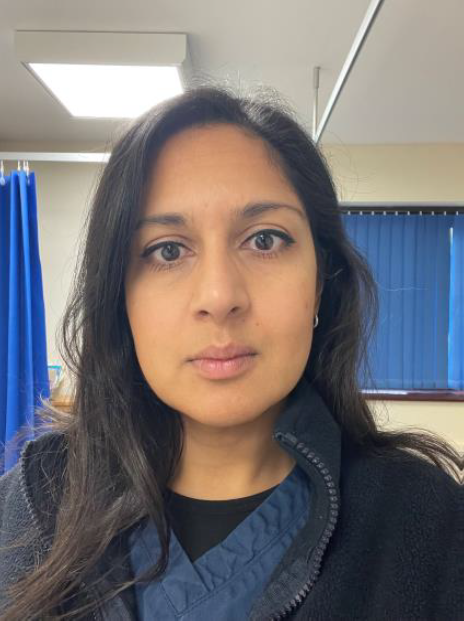
Dr Sarah Westerbeek is a GP and Knowledge Mobilisation Fellow whose work focuses on addressing health inequalities in Kent and Medway, particularly around undiagnosed and undertreated hypertension. Building on a successful pilot in Maidstone that identified over 300 new cases of hypertension, Sarah’s current project supports primary care practices through education, outreach, and targeted interventions. Her approach combines clinical insight with population health strategies, aiming to improve cardiovascular outcomes across the region.
What inspired you to focus on tackling undiagnosed hypertension across Kent and Medway as the core of your Knowledge Mobilisation Fellowship? Can you give a brief explanation of the project you are working on?
Having worked as a GP for over 10 years and having recently completed a fellowship in Population Health Management I became aware of certain health inequalities within Kent and Medway, one of which was related to the diagnosis and management of hypertension. Undiagnosed and undertreated hypertension is a major contributor to premature death due to cardiovascular disease. Therefore, I undertook a project within West Kent to focus on improving the detection of patients with high blood pressure in areas of high deprivation, which successfully identified over 300 new patients. This project demonstrated to me the need for such targeted work, and the barriers and facilitators that exist to optimum hypertension management. As part of this current fellowship, I will therefore continue to build on the work that I have already done, by working with NHS Kent and Medway to support practices to improve the treatment of their hypertensive patients, through providing support and education to dedicated staff and through the utilisation of a funded Local Incentive Scheme from the Kent and Medway Integrated Care Board.
In what ways has your experience as a GP shaped your understanding of the challenges and opportunities in detecting and managing hypertension at the primary care level?
Working as a GP, in combination with the additional experience I have had training in hospitals and more recently through fellowships with the Public Health team and the ICB, has given me a great deal of insight into the difficulties that both patients and clinicians face in treating chronic conditions optimally, including hypertension. Challenges include a lack of access to equipment, resources, education and difficulty in accessing hard to reach groups of patients, who often are those at highest risk of chronic disease. It has demonstrated to me that need for targeted projects and approaches to reach these populations, particularly those from areas of high deprivation, who are 30% more likely to suffer from hypertension than those from the least deprived areas. I have also gained experience in the use of digital tools, such as SMS messaging, to support practices in reaching large numbers of patients. I hope to bring all this learning to my current project.
Can you share more about the pilot project in Maidstone—what were the most surprising findings or challenges?
The pilot project in Maidstone was focussed on increasing the detection of hypertension amongst patients in a highly deprived area. The methods used included searches of the electronic patient records at a practice level, followed by invitation by SMS for blood pressure checks and follow up and management by a dedicated hypertension pharmacist. The project was highly effective and identified over 300 new patients with hypertension, over half of whom were treated to their target range by the end of the project, which ran for 18 months in total. The most surprising finding for me was that patients in these deprived areas had very poor access to home blood pressure monitors, which was a rate limiting step in our project, and I believe that through the increased availability of these then more patients would be diagnosed and treated to target.
Knowledge Mobilisation strategy
How do you define ‘knowledge mobilisation’ in the context of your project, and how are you applying it practically?
My current project will focus on increasing the number of patients with diagnosed hypertension being treated to target (i.e. treated to target blood pressures of ,140/90 for those under 80 years old and 150/90 if 80 or above, as per NICE guidance).
The knowledge mobilisation element, defined by the NIHR as “transferring knowledge from where it was generated to the context where it can deliver the most impact”, will be focussed on disseminating that evidence behind treating patients to these targets, by providing education sessions and resource packs to designated cardiovascular champions within practices. The aim is that by increasing the knowledge and resources that the cardiovascular champions have, they will be better equipped to treat hypertensive patients more intensively.
What specific strategies are you using to ensure that the learning from your pilot is effectively transferred to other PCNs across Kent and Medway?
The knowledge that I have gained from the pilot project in Maidstone, will be incorporated into the educational resource and sessions that I will be delivering to the cardiovascular champions across Kent and Medway.
Evaluation and impact
What metrics will you use to evaluate the success of the project, both in terms of patient outcomes and professional practice?
Outcome measures will include the change in the number of patients treated to target within practices across Kent and Medway, with a specific focus on those whose cardiovascular champions attended educational sessions. As well as this, qualitative feedback from the cardiovascular champions regarding the usefulness and perceived impact of the sessions and project, which will be gathered using a written questionnaire.
How do you plan to capture and integrate patient feedback throughout the project lifecycle?
Patient feedback will not directly be captured within the project, but feedback from the clinicians will be gathered in stages. Firstly, after the first set of educational sessions have been conducted, and then again after the second round of sessions have been conducted.
What are your expectations for the long-term impact of this project on cardiovascular health outcomes in the region?
I hope that through this project, there will be an increase in the understanding of hypertension, the importance of treating it aggressively where appropriate, and the methods by which to do so, across a network of clinicians within Kent and Medway. I also hope that through creation of these networks there will be continued long-term improvements, peer learning and upskilling of those managing patients with hypertension.
Equity, inclusion and community engagement
You’ve mentioned working with “Hypertension Heroes” and conducting focus groups—how have these partnerships shaped your approach?
During the pilot project we worked with Hypertension Heroes, who are a voluntary sector organisation and supported our project by providing blood pressure checks in community settings. The collaborative working was invaluable and I learnt a lot about the importance of outreach activities when trying to access hard to reach or vulnerable groups, as well as the reasons that individuals do not seek for blood pressure management from their GP practices. The learning has informed our current project and specific outreach activities will be promoted with practices.
How are you ensuring that the project is inclusive and accessible to diverse communities, particularly those in areas of high deprivation or with language barriers?
Again, using learning from the previous pilot project, and through working within the NHS Kent and Medway Sustainable Healthcare Unit (SHCU) team we are able to ensure focus on accessibility. We have a dedicated researcher within the SHCU who has a background in psychology, who is also looking at the accessibility of the support provided. We will ensure that any resources provided have been checked for accessibility issues and will provide links to resources in different languages for those who need it. We will also promote the use of specific outreach activities that are adapted for those with language barriers or other accessibility issues, to be run by practices.
Scaling and sustainability What are your plans for scaling the project beyond Kent and Medway, and what support would be needed to do so?
Once the project has been completed and the data gathered and analysed, the findings will be disseminated through NHS cardiovascular networks within the county and region, and through the academic networks which work alongside them. If there is success, then the methodology can be shared with other areas for their utilisation. I will also consider writing up the project and findings for publication through journals and conferences.
How do you envision sustaining the impact of this work after the 18-month fellowship ends?
I hope that the impact of this work will be sustained beyond the 18 months by upskilling and increasing knowledge within the cardiovascular champion network across Kent and Medway. As part of our project, we will suggest that the knowledge gained is shared by the champions within their own practices and PCNs, and the networks will be encouraged to continue to meet and provide peer to peer learning opportunities.
This research was funded by the National Institute for Health and Care Research (NIHR) Applied Research Collaboration Kent, Surrey and Sussex. The views expressed are those of the author(s) and not necessarily those of the NHS, the NIHR or the Department of Health and Social Care.
